The Role of Applied Learning in Building High-Performing Teams
Want the latest AEC&M insights as they develop?
Training is an important starting point to build a high-performance team of technical professionals in AEC, design, and manufacturing organizations. It introduces new concepts and builds foundational knowledge. However, the real learning begins after the training session ends and employees return to their day-to-day project work.
They encounter unfamiliar situations. They forget steps. They have questions that weren’t covered in class. They need to apply what they learned in the context of real work. For organizations in architecture, engineering, construction, and manufacturing, that’s where workforce capability is either reinforced or begins to erode.
Learning Doesn’t End When Training Does
One of the most widely recognized concepts in learning science is the Ebbinghaus Forgetting Curve, which demonstrates that people forget a significant portion of newly learned information if it isn’t reinforced or applied. That’s not a failure of training. It’s the science behind how people learn.
Without opportunities to practice and apply new knowledge, even well-designed training programs lose effectiveness over time. For technical professionals, the challenge is even greater. Software changes. Company standards evolve. AI introduces new ways of completing familiar tasks. Project requirements differ from one client to the next. Employees aren’t simply trying to remember information; they’re constantly applying it in new situations. Learning has to continue long after formal training ends.
High-Performing Teams Learn Continuously
The strongest teams don’t rely on a single training event to build expertise. They create environments where learning becomes part of everyday work.
- Questions are answered as they arise.
- Knowledge is shared across teams instead of remaining with a handful of experts.
- New skills are reinforced while employees are completing real projects.
- Lessons learned from one project improve the next.
Continuous learning isn’t about asking employees to spend more time in training. It’s about making knowledge accessible when it has the greatest impact.
Research from the World Economic Forum continues to identify continuous reskilling as one of the defining workforce priorities as AI, automation, and digital transformation reshape industries. Organizations that make learning an ongoing part of work are better positioned to adapt as those changes accelerate.
Learning in the Flow of Work Builds Confidence
Think about how technical professionals solve problems today.
- A designer needs to remember how to configure a complex feature in Inventor.
- An engineer wants to confirm a company standard before issuing drawings.
- A project manager needs guidance on a workflow that hasn’t been used in several months.
Very few people stop working, schedule formal training, and come back a week later. They look for answers while they’re working. That’s where learning in the flow of work becomes so valuable.
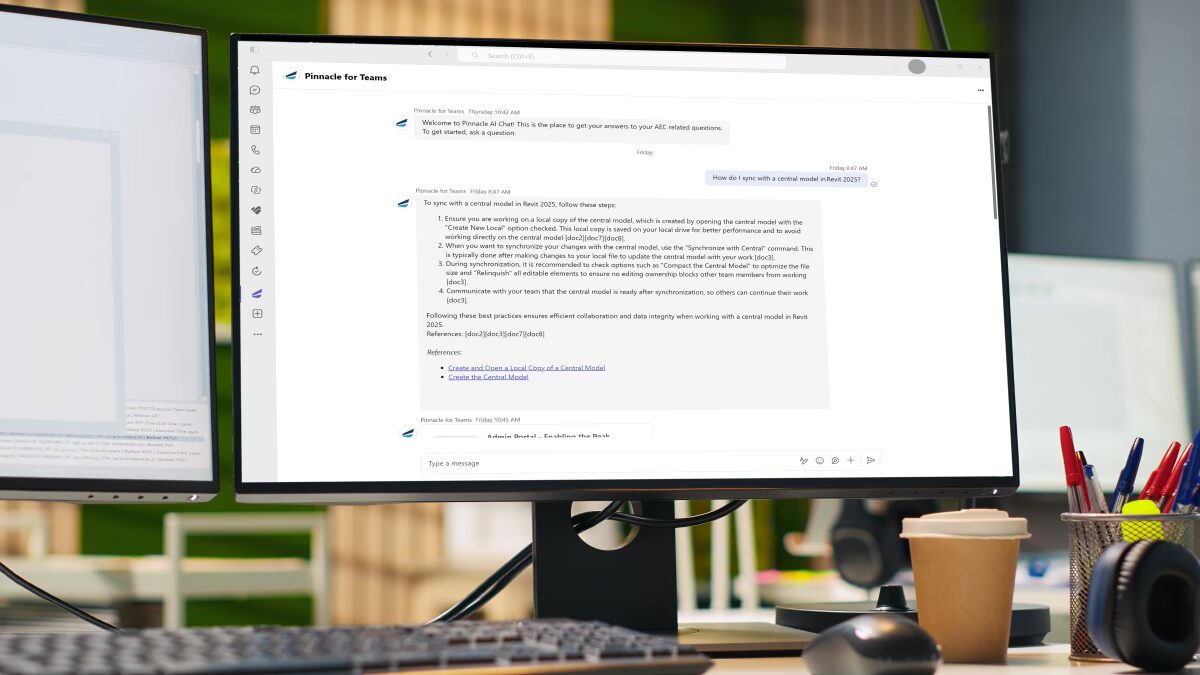
Instead of interrupting productivity, employees can access short videos, workflows, documentation, and contextual guidance exactly when they need it. Questions are answered in the moment, allowing employees to continue moving projects forward while reinforcing their knowledge at the same time. Learning becomes part of the work instead of separate from it.
Applied Learning Strengthens Teams
Applied Learning extends learning beyond formal training by connecting it directly to the work employees do every day. Instead of expecting people to remember everything from a classroom session or online course, organizations reinforce learning as employees complete projects, solve problems, and adopt new technologies.
Over time, that approach creates benefits that reach far beyond the individual learner.
- Greater consistency as employees follow the same standards, workflows, and best practices across teams and locations.
- Faster problem solving because guidance, documentation, and technical knowledge are available when questions arise.
- Improved technology adoption by supporting employees as they begin using new software and workflows in real projects.
- Stronger knowledge transfer by capturing institutional knowledge and making it accessible to everyone instead of relying on a handful of experienced employees.
- More confident teams because employees can find answers quickly and continue building their skills without interrupting productivity.
None of these outcomes happen because employees completed another course. They happen because learning becomes part of how work gets done. When knowledge is available at the moment it’s needed, organizations spend less time retraining, answering repetitive questions, or correcting inconsistent work, and more time building workforce capability.
Building a Culture of Continuous Learning
High-performing teams aren’t built during scheduled training sessions. They’re built over weeks, months, and years as employees gain experience, share knowledge, and solve increasingly complex problems together.
Organizations play an important role in that process. When technical guidance, company standards, and learning resources are readily available, employees don’t have to rely on memory alone or interrupt colleagues every time they encounter something unfamiliar. They can find answers, apply them immediately, and continue building their expertise while keeping projects moving forward.
That’s where learning creates the greatest value, not as a separate activity, but as a natural part of everyday work.
How Pinnacle Series Supports Applied Learning
Applied Learning is the foundation of Pinnacle Series.
Structured learning paths help employees build foundational knowledge, while learning continues through videos, workflows, documents, and contextual guidance available during everyday work. AI-powered search and SPARK help employees quickly discover relevant knowledge, reducing the time spent searching for answers and making it easier to reinforce learning during real projects.
The result is organizations develop more consistent teams, improve technology adoption, preserve institutional knowledge, and build workforce capability that continues growing long after formal training has ended.
Because high-performing teams aren’t created by what employees learn in a classroom. They’re built by what employees are able to apply every day.
Recent Posts
The latest posts on our blog, updated regularly with product tips, news, and industry advice on employee retention, reducing the skills gap, and more.