What Technical Teams Actually Need from Learning Platforms
What Technical Teams Actually Need from Learning Platforms
Picture a project engineer halfway through a Civil 3D corridor model who runs into a question about how your organization wants a specific assembly set up. The answer exists somewhere, maybe in a standards PDF on a shared drive, in a vendor video, or in the head of a senior CAD manager who is already buried in their own deadlines. What the engineer almost certainly won’t do is log into the company Learning Management System (LMS), because experience has taught them that it holds compliance courses and certificates rather than the help they need to finish the task in front of them.
That gap is common across AECO, design, and manufacturing organizations. Most learning management systems were designed to manage training, not to support technical workforce capability. They do a good job of assigning courses, tracking completions, and storing records, but technical teams need far more than that to do their best work.
Why Generic Learning Platforms Fall Short
Traditional LMS platforms were built primarily around HR and compliance workflows. Their core strengths are administration, scheduling, and recordkeeping, which all matter, but they treat learning as something that happens separately from the work. For technical professionals, that separation is the problem.
Technical work is shaped by software that updates constantly, standards that vary by client and project, and workflows that are specific to each organization. When a learning platform can’t reflect any of that, employees fill the gaps on their own by searching YouTube, digging through vendor portals and SharePoint sites, or interrupting a colleague. Over time, this leads to low engagement with formal learning, inconsistent work, slower technology adoption, and a growing dependence on a few experienced people who end up serving as the department’s unofficial help desk.
The cost adds up quickly. Studies show that up to 80% of unreinforced learning disappears within weeks, so training that isn’t applied soon after it’s delivered often has to be repeated. On the project side, an estimated $46 billion is lost each year in the construction industry alone due to misaligned teams.
So what should a learning platform do differently? Here are six things technical teams actually need.
1. Learning Connected to Real Workflows
Knowing how a software tool works is only part of the job, because technical professionals also need to know how their organization expects that tool to be used. That includes templates, naming conventions, review steps, and the handoffs between disciplines. A course on Revit fundamentals won’t explain how your team sets up a project file or which families are approved for use on client work.
Technical teams need learning that follows the shape of their actual work. That means step-by-step Workflows that guide people through company processes, Learning Paths built around real roles rather than generic course catalogs, and resources organized around the task someone is trying to complete. When learning mirrors the workflow, employees can move from understanding a concept to applying it on a live project without having to translate between the two.
2. Company Standards Built Into the Learning Environment
Standards are what turn individual skill into consistent, high-quality deliverables, yet in many organizations they live in places learners rarely visit. When CAD and BIM standards, QA/QC procedures, SOPs, and project templates are scattered across shared drives and email threads, standards drift is almost inevitable, especially across multiple offices and project teams.
A learning platform built for technical teams should make it easy to embed those standards directly alongside technical training, so people learn your way of working from their first day and can return to it whenever they need a refresher. Keeping standards in the same place as learning content also makes them far easier to update as client requirements or software versions change, rather than chasing outdated copies across the organization.
3. Software Guidance That Keeps Pace With Technology
AECO, design, and manufacturing teams rely on a broad and constantly evolving technology stack that can include Autodesk, Bentley, Bluebeam, Esri, SOLIDWORKS, Trimble, and many other tools. A learning platform that relies on generic business content, or that requires every technical course to be built from scratch, will always lag behind the software teams use every day.
Technical teams need access to expert-led, industry-specific content that is updated as software evolves, along with short-format options that fit into a busy project schedule. Micro-learning and nano-learning lessons make it possible to pick up a new feature or refresh a skill in a few minutes, which helps organizations get more value from their technology investments instead of watching expensive licenses go underused. Our Technology Adoption Guide explores how to turn new software into real productivity gains.
4. Operational Support at the Moment of Need
Technical questions rarely arrive on a training schedule. They come up in the middle of a deadline, during a model review, or on the jobsite, and the person asking needs an answer quickly so the project can keep moving.
That’s why technical teams need learning platforms that work as operational support, not just as course catalogs. Searchable Libraries, short Videos, reference Documents, and AI Chat that answers questions in plain language help people find what they need without stepping away from their work for long. Delivering that support inside the tools teams already have open all day, such as Microsoft Teams, removes even more friction. Every question answered this way means one less interruption for a senior engineer or CAD manager and one more piece of knowledge captured for the next person who needs it.
5. Learning Tied to Project Execution
For technical organizations, the purpose of learning is better project outcomes, including fewer errors, less rework, faster onboarding to new projects, and more consistent deliverables. A learning platform should support that goal directly rather than sitting off to the side of the business.
In practice, this means being able to prepare a team for a specific project by assigning the software skills, client standards, and procedures it requires, and making those resources available to everyone who touches the work. Many projects also involve contractors, partners, and offshore support teams, so technical organizations benefit from being able to share the right training with external users without opening up their entire internal system. When everyone on a project is learning from the same playbook, execution becomes far more predictable.
6. Visibility Into Capability, Not Just Completions
Completion rates tell you who clicked through a course, but they can’t tell you whether your team is ready to deliver a complex BIM project, adopt a new platform, or take on a new type of work. Technical leaders need to understand capability, which means knowing where skills are strong, where gaps exist, and how those gaps are changing over time.
That starts with Skills Assessments that measure real proficiency and use the results to drive Personalized Learning, so employees can skip what they already know and focus on what they need to learn next. It continues with Reporting that shows engagement, progress, and skill development across individuals, teams, projects, and departments, giving managers and leadership the insight they need to plan resources and make informed decisions. One Eagle Point Software client used this approach to prepare 2,000 internal candidates for the Certified Professional BIM Project Information exam by combining testing, training, and third-party expertise into a single development pathway. You can learn more about how applied learning supports BIM teams in our Applied Learning for BIM overview, and how it strengthens onboarding and career growth in our Hire, Develop, and Retain guide.
What This Looks Like in Practice
Arcadis, a global leader in sustainable design, engineering, and management consulting with more than 36,000 people in over 30 countries, offers a strong example of what happens when a learning platform supports technical work rather than simply tracking it. When Arcadis launched an upskilling initiative with Autodesk to drive Autodesk Construction Cloud adoption, Pinnacle Series became a central part of the effort, reinforcing live sessions with on-demand learning and helping keep support teams in India and Romania aligned with Arcadis standards.
Several of Arcadis’ acquisitions were already using Pinnacle Series, which allowed them to bring their custom content and learning history with them, while KnowledgeSmart Skills Assessments helped teams understand the skills of new colleagues so they could build appropriately skilled project teams. Within the DPS Group alone, a single training initiative eliminated 142 redundant training hours for a budget savings of $20,000, and the group replaced a manual, inconsistent induction process with a tracked course that combines Videos, Documents, and quizzes. Across the organization, Arcadis has added 3,000 Videos and 1,900 Documents of its own and recorded 27,000 course completions from 7,803 unique active users. You can read the full story in our Arcadis success story.
How Pinnacle Series Delivers What Technical Teams Need
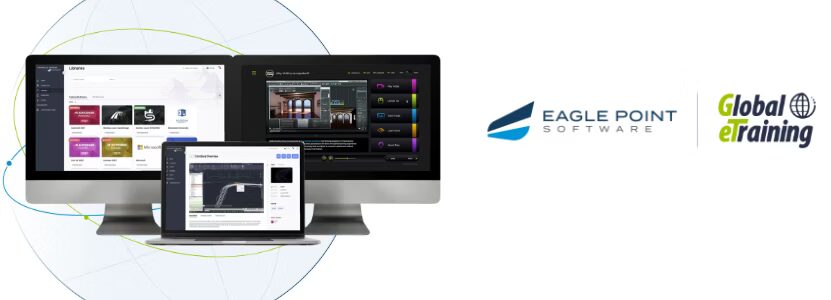
Eagle Point Software built Pinnacle Series specifically for AECO, design, and manufacturing organizations. It brings together the on-demand content of eLearning, the structure and accountability of a learning management system, and applied learning in one platform, so learning supports execution instead of existing separately from it.
Learning That Works the Way Technical Teams Work
Technical teams don’t need another place to store courses. They need learning that is connected to their workflows, built around their standards, current with their software, available at the moment of need, tied to project outcomes, and measured by capability rather than completions. When a learning platform delivers all of that, it stops being something employees have to remember to use and becomes part of how they get their work done.
Schedule a demo to see how Pinnacle Series can help your technical teams build skills, apply them faster, and deliver better results.
Build Skills. Apply Fast. Deliver Results.
Want the latest AEC&M insights as they develop?
Recent Posts
The latest posts on our blog, updated regularly with product tips, news, and industry advice on employee retention, reducing the skills gap, and more.