Is Everyone on Your Project Working From the Same Playbook?
Want the latest AEC&M insights as they develop?
Look at the people working on almost any major AEC project, and you’ll see the team reaches far beyond a single organization. Architects, engineers, contractors, subcontractors, joint venture partners, owners, and specialty firms all come together around the same goal. Each one brings its own expertise, technology, and way of working.
That mix is exactly what makes great projects possible. Different disciplines, different backgrounds, different strengths – all pointed at the same outcome. The opportunity is making sure everyone on that team, regardless of who signs their paycheck, understands the standards, workflows, and expectations that define how the project gets delivered.
One Project, Many Organizations
An org chart tells you how a company runs. A project tells a different story: one that spans firms, offices, regions, and time zones.
A single project might bring together architects from one firm, engineers from another, and contractors, consultants, and technology specialists from several more. Every contributor adds real expertise. The opportunity in front of every project leader is to turn that combined expertise into alignment.
We do that by answering a few core questions clearly for everyone involved: Which standards apply? Which workflows are we following? How are we using our software applications on this project? What does the client expect? Where can someone go for guidance when they need it?
Those are great questions to have answered well, no matter whose business card someone carries.
Communication Gets Teams Talking. Learning Gets Teams Aligned.
Modern collaboration platforms have made it easier than ever for distributed teams to share information in real time. That’s a real win. Everyone can see the same model, the same document, the same conversation.
We think the next step is making sure everyone shares the same understanding of how the work should get done. A PlanGrid and FMI study from several years ago found that miscommunication and poor project data drive 48% of all rework on U.S. construction jobsites, costing the industry more than $31 billion a year. That’s the cost of people not having access to the right information and knowledge at the right time – and it’s exactly the opportunity a connected learning environment is built to close.
Communication helps teams coordinate. Learning helps people execute. Together, they’re a powerful combination.
Extending the Learning Experience Beyond Your Organization
Most organizations already do a great job developing their own people – software training, documented standards, workflows, onboarding programs, internal knowledge bases. That foundation is valuable, and it’s worth building on.
The opportunity is extending that same experience to everyone contributing to a project, not just internal employees. A consultant picking up a firm’s BIM standards. A subcontractor following a project-specific workflow. A joint venture partner learning a new application built for the job. When we give every contributor access to the same quality learning experience, we set the whole team up to move faster together.
Turning Access Into Understanding
Giving someone access to a shared folder is a great start. Helping them truly understand what’s in it is where the real value shows up.
The same is true for standards, workflows, and project requirements. People benefit from understanding not just what a standard says, but why it matters and how it shapes their part of the work. Someone might need a quick refresher on an application before diving into a new workflow. Another contributor might need a slightly different set of resources based on their discipline.
That’s where a centralized learning environment shines. Instead of just distributing information, we can bring training, standards, workflows, and guidance together, so everyone has a consistent, reliable way to understand what’s expected of them.
Built to Grow With the Team
Project teams evolve, and that’s a good thing. It means the work is moving forward. People join, people move on, new subcontractors come aboard, consultants change, responsibilities shift.
Each change is a chance to bring someone new up to speed quickly. A strong foundation makes all the difference. When the learning and knowledge stay connected to the project itself, someone joining today can get access to the same foundation as someone who joined six months ago – no rebuilding required, no lost momentum.
Thinking Beyond Internal Learning
This is a shift in how we think about workforce development. The traditional question has been: how do we prepare our employees?
For connected project teams, we get to ask a bigger question: how do we prepare everyone who contributes to the work?
That doesn’t mean every person needs access to everything. Different contributors need different learning and guidance based on their role. But the underlying opportunity is the same: when people are executing the same work together, a shared foundation of learning helps the whole team perform at its best.
Extending Learning Across Your Whole Project Team
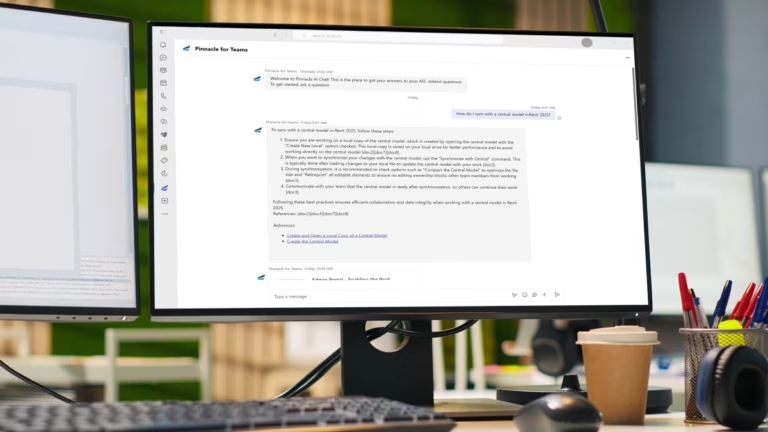
This is where we come in. At Eagle Point Software, we built Pinnacle Series to help organizations create exactly this kind of foundation — bringing software training together with your own standards, workflows, processes, and organizational knowledge in one connected Applied Learning environment.
We designed that environment to reach beyond internal employees, so you can bring consultants, subcontractors, partners, and other outside contributors into the same experience, with the knowledge that’s most relevant to their part of the work.
Instead of relying only on meetings, documents, and one-on-one conversations, we help you create a consistent, connected experience for everyone contributing to the project – no matter who they work for. And because that knowledge stays accessible, people always have somewhere to return when they need to reference a standard, revisit a workflow, build a new skill, or find guidance in the flow of the work.
Pinnacle Series isn’t replacing the collaboration tools you already use to manage and deliver projects. It’s strengthening a different part of the equation: helping everyone collaborating on those projects learn how the work should get done.
Your project team reaches beyond your org chart. With us, your approach to learning can too. Ready to bring every person on your project team into the same learning environment? Contact us to talk about extending consistent training and standards across your entire project team: eaglepoint.com/contact
Recent Posts
The latest posts on our blog, updated regularly with product tips, news, and industry advice on employee retention, reducing the skills gap, and more.