Why Scalable Training Is the Answer to Top Industry Disruptors
Want the latest AEC&M insights as they develop?
An investment in a scalable knowledge platform is an investment in your future.
As learning becomes more central to economic strategy in the coming years, scalability will be a critical feature of learning platforms, empowering organizations to increase the scope and maturity of their learning and development strategies without stumbling over technological bottlenecks.
Experts are already pointing out the markers of rapid economic change, particularly thanks to the growing adoption of AI. New skills are in higher demand in the job market. Some of these are technology-specific skills, such as model development and data infrastructure, but others are a sign of the ways in which workforces are realigning around effective tech implementations. As intelligent agents and automation take over repetitive and lower-value work, softer skills like communication and creative problem-solving become a much higher priority in workforce planning.
Weathering the current shift in workforce needs is likely to be top of mind for most organizations, but it also represents an important indicator of what’s possible in the future. Economic pressures are constantly evolving, and the current period of change is a prime opportunity not just to adapt, but to build adaptability into the core of your operations. A scalable learning platform gives you the tools to quickly and easily adjust to changing demands by:
- Incorporating new subject matter and levels of expertise
- Adding new learning methods and routes for accessing information
- Building new development paths to match a restructured organization
…and, in general, adding flexibility both to your workforce’s skill base and your learning and development (L&D) infrastructure. Scalability allows you to respond quickly and efficiently to changing demands, ensuring your organization stays ready for whatever comes next.
Disruptions are costly—and applied learning produces better results.
Beyond the demands of workforces, the way organizations use knowledge is also changing. From data analytics to knowledge management platforms, technology is turning knowledge into a strategic asset. Getting the most out of your institutional knowledge, workforce skills, and learning content means making all of that information as accessible as possible—up to and including weaving it into the fabric of day-to-day work, so it’s at employees’ fingertips almost before they know they need it. This helps to avoid some of the key limitations of traditional training, like:
- Interrupting the flow of employees’ work
- Monopolizing productive hours
- Separating knowledge from the context in which it’ll be used
- One-and-done training—limited repetition and poorer retention
There are a lot of steps that come before that stage of L&D maturity, however, and if your organization is just starting out, the gap can seem intimidating. It’s essential to find a knowledge platform that can deliver what you need at every step along your L&D journey, so that when you’re ready to expand the integration of knowledge into your daily workflows, your technology won’t hold you back—it’ll empower you.
Expanding personalization drives efficiency.
Broadening the scope of your L&D strategy comes with increasing structural challenges. As you gain users, cover more subjects, or accommodate more goals, the potential learning paths within your platform multiply. To keep things efficient both for your administrators and your learners, it makes sense that you’d want to simplify. Tailoring a learning plan ensures that a user can focus on the most relevant material and avoid getting bogged down with content they’ve already covered or subjects they’ve mastered.
Managed on a case-by-case basis, this degree of individualization is too labor-intensive for any organization with more than a handful of employees. But as more users adopt your learning solution, the need to keep them engaged and drive ROI becomes more urgent—to say nothing of the fact that your employees have probably grown accustomed to highly personalized experiences in the consumer sphere.
As you grow your organizational investment in learning, a high-quality knowledge platform should provide the tools to personalize the experience for users at scale: integrated knowledge assessments, manager delegation, customizable content frameworks, and more. With these features, you can continue providing an exceptional—and efficient—learning experience for your workforce, without adding excessive amounts of overhead.
Maintaining a consistent platform lets you build on success.
But why the focus on scalability specifically? Learning platforms are tools designed for a particular purpose, and some may be more suitable for larger organizations than others. As your organization grows and your L&D strategy matures, can’t you “scale up” by migrating to a new solution or expanding functionality through third-party add-ons? Couldn’t an à la carte approach give you a more tailored result while cutting back on cost?
The short answer: it’s unlikely.
Now that enterprise technology has at least a decade of experience with Software-as-a-Service (SaaS) and other web- or cloud-based solutions to look back on, some of the drawbacks to the piecemeal approach are becoming apparent. Context-switching—needing to navigate between siloed tabs or applications while working—can drain as much as four hours of productive time per week as employees risk distraction or duplication of work. What’s more, transitioning to an entirely new platform carries a major productivity cost for whole teams, some of whom might be involved in data migrations and setup, and others who will at minimum need to learn to navigate a new system.
To avoid this “tool sprawl,” leading organizations are prioritizing investment in the kind of comprehensive, scalable platforms that can flex and grow along with them—and knowledge platforms are no exception. Finding and sticking with the right platform keeps your valuable knowledge in-house and gives you the tools to build on it, creating a knowledge foundation that’s unique to your organization and customized to your precise needs.
Embrace a solution that will be with you for the long haul.
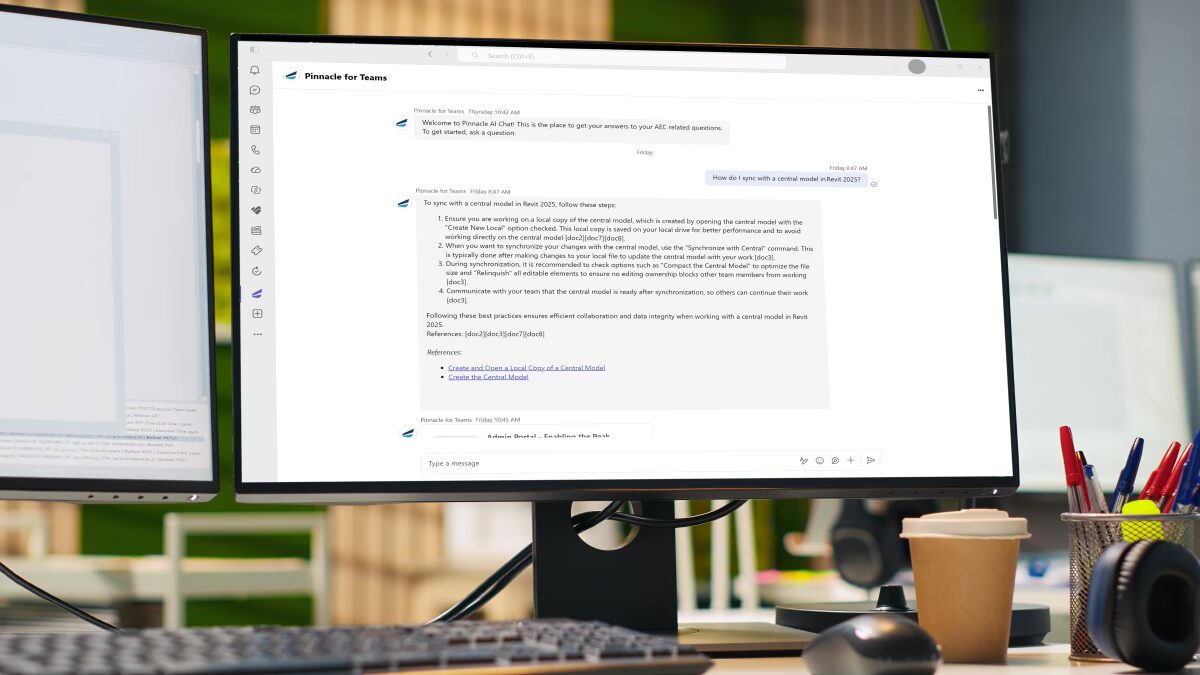
Eagle Point Software’s flagship Pinnacle Series applied learning solution is designed to make the future of knowledge accessible for any organization. Wherever you are in your L&D maturity journey, Pinnacle Series meets you where you are and provides world-class learning content and infrastructure to pave the way for your growth.
Pinnacle Series offers a deep library of industry learning content, as well as customizable knowledge assessments, flexible content management capabilities, and administrative structures that adapt to your organization. Knowledge management is the differentiator of the future—and now is the time to look ahead. To learn more about what Pinnacle Series can deliver for your organization, and to see the platform in action, request a demonstration today.
Recent Posts
The latest posts on our blog, updated regularly with product tips, news, and industry advice on employee retention, reducing the skills gap, and more.