What Does Workforce Readiness Have to Do With Project Profitability?
Want the latest AEC&M insights as they develop?
Are Your Projects as Profitable as They Need to Be?
Projects are where AECO firms make their money. A lot goes into determining whether those projects are profitable or not. Scope, schedule, fees, staffing, technology, and client expectations all play a role. But there is another factor that can be easy to overlook: how prepared are the people doing the work?
When project teams are prepared and aligned, more of their time can go toward productive project work. When they aren’t, the financial impact can show up in slower time to productivity, repeated questions, inconsistent execution, avoidable errors, rework, delays, and additional labor hours. Individually, some of those issues may seem small. Across a project team, or across an entire portfolio of projects, they can add up quickly.
Project Profitability Is Closely Tied to Time
For most AECO firms, people and time are two of the largest project costs. That makes how project hours are used an important part of profitability.
Consider what happens when someone joins a new project. Even an experienced employee may need to learn new project standards, understand different workflows, become familiar with client requirements, or use an application differently than they have in the past.
Procore’s 2025 Future State of Construction report found that 18% of project time is lost searching for data and another 28% is wasted due to rework.
Earlier research from Autodesk and FMI found a similar problem. Construction professionals reported spending 35% of their time – more than 14 hours per week – on nonproductive activities, including looking for project information, resolving conflicts, and dealing with mistakes and rework.
Many of these challenges come back to whether people can quickly access the knowledge they need to do the work correctly, including relevant project-related learning. It also means project standards, workflows, procedures, client requirements, technical guidance, and the training needed to build or refresh a skill.
When that learning and knowledge is brought together in one central location and organized around the project, people have a clearer place to go to understand what they need to know, how work should be done, and where to find answers as the project moves forward. It can reduce time spent searching for information, asking others for help, and correcting work that wasn’t done correctly the first time.
Where does that knowledge come from? Often, it comes from a kickoff meeting, a collection of documents and folders, or the people who already know the project.
That can work, but it also consumes time. The new team member spends time getting up to speed. Project managers, BIM/VDC leaders, and experienced technical staff spend time answering questions and explaining how work should be done. If someone doesn’t understand a requirement early enough, the cost can become much greater when work has to be corrected later. Every one of those hours ultimately belongs somewhere on the project.
The Cost of Getting People Up to Speed
Project onboarding is sometimes viewed as an administrative step before the real work begins. It is more than that.
Getting people productive faster means getting them the learning and knowledge they need to contribute effectively – from software training and project standards to workflows, procedures, and other project-specific requirements.
This can be a challenge for projects of any size. Even a small project requires people to understand how the work should be done, where to find the right information, and what is expected of them. As projects grow, that challenge becomes more complex. More people, offices, disciplines, consultants, subcontractors, and partners may be involved. People join at different times, responsibilities change, and new contributors may enter the project long after the original kickoff.
Repeatedly recreating onboarding for each person isn’t scalable. A more structured approach can help organizations create a consistent starting point for everyone doing the work while reducing the burden on the experienced people who would otherwise be responsible for transferring that knowledge one person at a time.
Inconsistency Can Get Expensive
Getting people started is only part of the equation. They also need to understand how the work should be done. Autodesk and FMI found that poor project data and miscommunication were responsible for 48% of rework in U.S. construction in their study.
Project teams may be working with specific standards, workflows, applications, QA/QC procedures, client requirements, and organizational best practices. When those resources are scattered across different systems, folders, documents, and individuals, there is more opportunity for people to approach the same work differently.
That variation can lead to inefficiency. In some cases, it can lead to mistakes and rework. Rework means paying for work that has already been done once.
Creating a centralized environment for project learning and knowledge gives people a common place to access the training, standards, workflows, and guidance that support consistent execution. This isn’t about giving people more content. It’s about making the right knowledge easier to access and apply to the work they’re doing.
The Project Team Is Bigger Than Your Organization
There’s another dimension to the challenge. Today’s projects rarely stop at the boundaries of one organization. Employees may be working alongside consultants, subcontractors, joint venture partners, and other outside contributors.
They’re all contributing to the same project, but they may not be receiving the same onboarding, learning, standards, or guidance. That creates another opportunity for inconsistency. If everyone is expected to work toward the same project outcomes, there is value in creating a more consistent learning environment across the entire project team.
The goal is to give everyone doing the work a clearer understanding of what’s expected, where to find the knowledge they need, and how the project should be executed.
Project Readiness Shouldn’t Be an Assumption
Assigning someone to a project doesn’t necessarily mean they’re ready for it. They may know Revit, Civil 3D, Bluebeam, Bentley, or another software applications. But do they know how they’re expected to use it on this project?
- Do they understand the project standards?
- Do they know the required workflows?
- Are they prepared to use the project’s technology?
- Have they completed the learning that’s expected of them?
- Do they know where to find guidance when they need it?
Without a structured approach to learning and project readiness, project leaders may not know the answers until a knowledge gap starts affecting the work.
This is especially important as project teams become more connected. Employees may work alongside joint venture partners and other outside contributors who bring different experiences, systems, and ways of working.
Building readiness into project onboarding gives organizations an opportunity to identify gaps earlier, provide targeted learning, and create greater accountability around what people need to know before and during execution.
Connecting Workforce Capability to Project Performance
This is where Pinnacle Series fits into the project profitability conversation. The financial value of learning isn’t just the cost of delivering training.
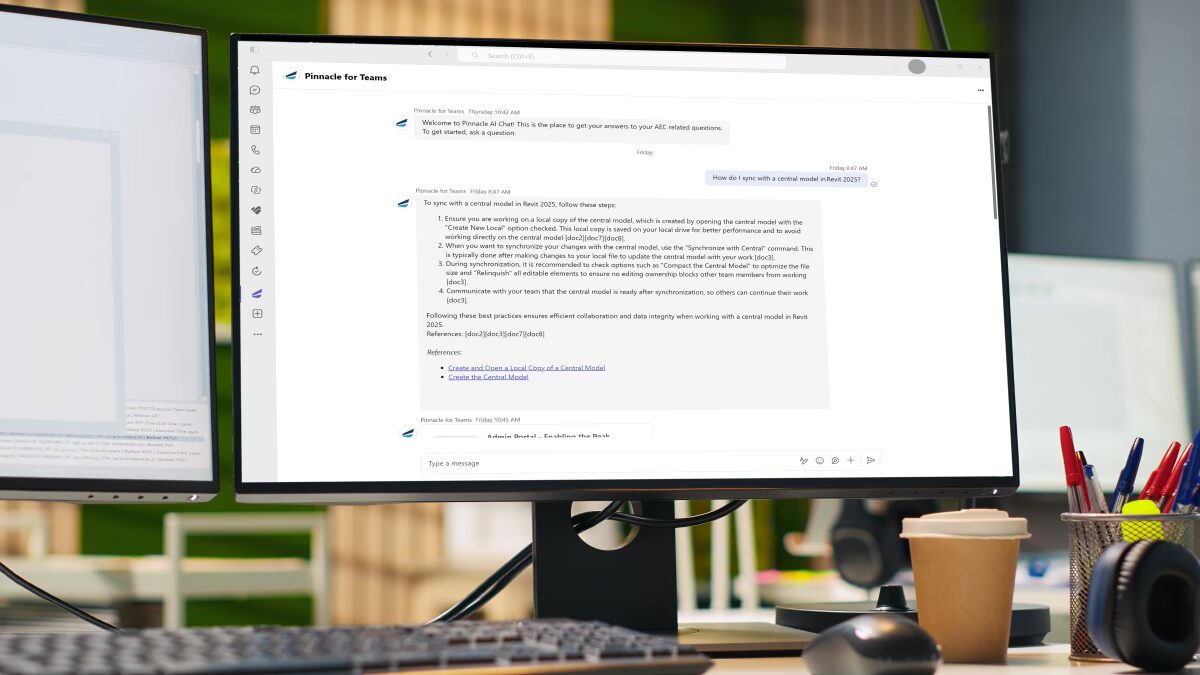
Pinnacle Series helps organizations bring software learning together with their own standards, workflows, processes, and internal knowledge in one Applied Learning environment. Teams can assess skills, address knowledge gaps, deliver targeted learning, reinforce organizational standards, and give people a central place to find guidance when they need it.
That creates an opportunity to approach project readiness differently.
Instead of relying on a one-time transfer of information, organizations can build a more repeatable approach to preparing people for the work – one that can scale, change, and extend beyond the organization.
The financial value is getting people productive faster, protecting project hours, reducing the burden on experienced staff, improving consistency, and helping prevent knowledge gaps from becoming expensive project problems.
Projects are where firms make their money. Helping people make better use of the hours that go into delivering those projects is where learning can have a much bigger business impact.
Recent Posts
The latest posts on our blog, updated regularly with product tips, news, and industry advice on employee retention, reducing the skills gap, and more.