Your LMS Wasn't Built for Technical Teams
Your LMS Wasn’t Built for Technical Teams
Most learning management systems (LMS) do exactly what they were designed to do: they assign courses, track completions, record certifications, and produce the reports HR and compliance teams need. For many organizations, that is enough. For technical teams in architecture, engineering, construction, operations (AECO), design, and manufacturing, it rarely is, because their daily work depends on software skills, standards, and workflows that a generic LMS was never built to support.
If your engineers, designers, and project teams treat your LMS as a box to check rather than a tool they rely on, the problem may not be your people or your content but the platform itself.
Most LMS Platforms Were Built for HR and Compliance
Traditional LMS platforms grew up around administrative needs such as onboarding paperwork, policy acknowledgments, harassment training, and annual certifications. Their core strengths are completion tracking, attendance records, and generic content management, which makes them a good fit for organization-wide requirements that look the same for every employee.
Technical work doesn’t look the same for every employee. A structural engineer, a BIM coordinator, a project manager, and a manufacturing design engineer each use different tools, follow different standards, and face different challenges on any given project. When a learning platform treats them all as interchangeable learners working through the same course catalog, the training it delivers ends up disconnected from the work they actually do.
Technical Organizations Have Fundamentally Different Needs
For technical teams, learning isn’t a separate activity that happens once a year; it is part of how projects get done. To be truly useful, a learning platform needs to support:
- Workflows: step-by-step guidance on how your organization completes specific tasks, from model setup to QA/QC reviews.
- Standards: company CAD and BIM standards, templates, and SOPs that keep deliverables consistent across teams and offices.
- Software guidance: training on the specific applications your teams use, including the new features that arrive with every release.
- Operational support: answers people can find in the moment they need them, without leaving their work or waiting on a senior colleague.
A generic LMS can host a PDF of your standards, but it can’t connect those standards to the software training, project onboarding, and day-to-day guidance that make them stick.
Why Engineers, Designers, and Project Teams Disengage
Research conducted by Cadalyst in cooperation with Eagle Point Software shows how wide the gap has grown between what technical teams need and what traditional training delivers.
In the AEC survey, time was the biggest obstacle, with approximately 74% of construction project managers and 60% of BIM/VDC leaders naming lack of time for training as their top challenge. Keeping content current was close behind, flagged by 66% of IT leaders and 54% of BIM/VDC leaders. Together, those numbers show that technical professionals can’t afford to step away from projects for training that may be outdated by the time they finish it.
The same research found that every group surveyed selected integration with key software, such as Autodesk Forma (formerly Autodesk Construction Cloud), as a top requirement for an eLearning platform, and 70% to 80% ranked it above all other features. Respondents also favored bite-sized modules that launch inside the applications they already use.
The product design and manufacturing research tells a similar story. Over 55% of leaders said their skills gaps widened over the past year, and 40% of product design engineers said industry-specific, CAD-centric content would do the most to improve their organization’s learning and development. The survey also found that engagement drops sharply when content feels outdated or generic, and more than 30% of leaders cited time constraints as a barrier to engaging employees.
When training lives in a separate system, covers generic topics, and pulls people away from deadlines, disengagement is a design problem rather than a motivation problem.
Managing Learning vs. Enabling Execution
The real difference between a traditional LMS and a platform built for technical teams comes down to purpose: one manages learning, while the other enables execution.
A platform focused on managing learning:
- Measures success by course completions and attendance
- Delivers the same catalog to every employee
- Keeps standards and SOPs in separate systems
- Requires employees to leave their work to find answers
A platform focused on enabling execution:
- Measures capability, readiness, and skill growth
- Assigns learning based on role, skills gaps, and current projects
- Embeds standards, workflows, and SOPs alongside training content
- Delivers guidance in the flow of work, when and where it’s needed
This is the idea behind applied learning, which connects learning directly to the software, standards, and workflows people use on real projects so new skills are put to work right away instead of fading from memory.
Built for the Way Technical Teams Work
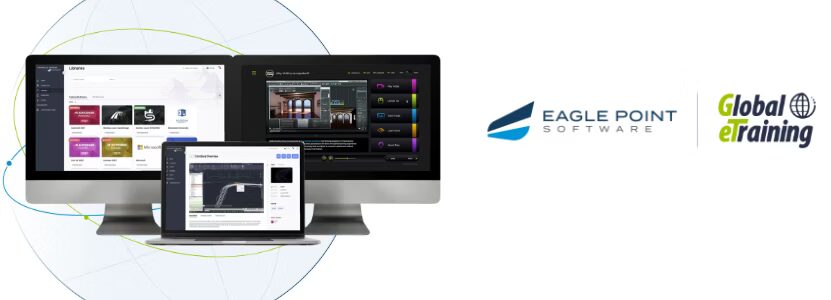
Pinnacle Series was built specifically for AECO, design, and manufacturing organizations, combining applied learning, technical content, and standards reinforcement in a single platform. Instead of managing learning in isolation, it helps technical teams:
- Access industry-leading technical content Libraries covering the software they use every day
- Learn in the flow of work with Videos, Workflows, Documents, and SOPs available during execution
- Identify real capability gaps with Skills Assessments and build Personalized Learning around each person’s role, standards, and projects
- Embed custom content, including QA/QC procedures, project standards, and templates, directly into the learning environment
- Move beyond completion tracking with Reporting that shows workforce readiness, onboarding progress, and standards adoption
The result is a learning environment technical teams actually use, because it helps them do their jobs better instead of adding another task to their day.
See the Difference
If your current LMS is managing training but not improving how your teams work, it may be time for a platform built for them. Request a demo to see how Pinnacle Series helps AECO, design, and manufacturing organizations turn learning into execution.
Want the latest AEC&M insights as they develop?
Recent Posts
The latest posts on our blog, updated regularly with product tips, news, and industry advice on employee retention, reducing the skills gap, and more.